
Intelligent Systems That Learn & Adapt
Machine learning enables computers to learn from data and improve over time without explicit programming. It's the engine behind recommendation systems, fraud detection, autonomous vehicles, and intelligent decision-making.
Our machine learning solutions help businesses automate complex processes, uncover hidden patterns, and make accurate predictions. From supervised learning to deep neural networks, we build models that deliver real business value.
200+
ML Models Deployed94%
Average Accuracy35+
ML Engineers12
Industry Awards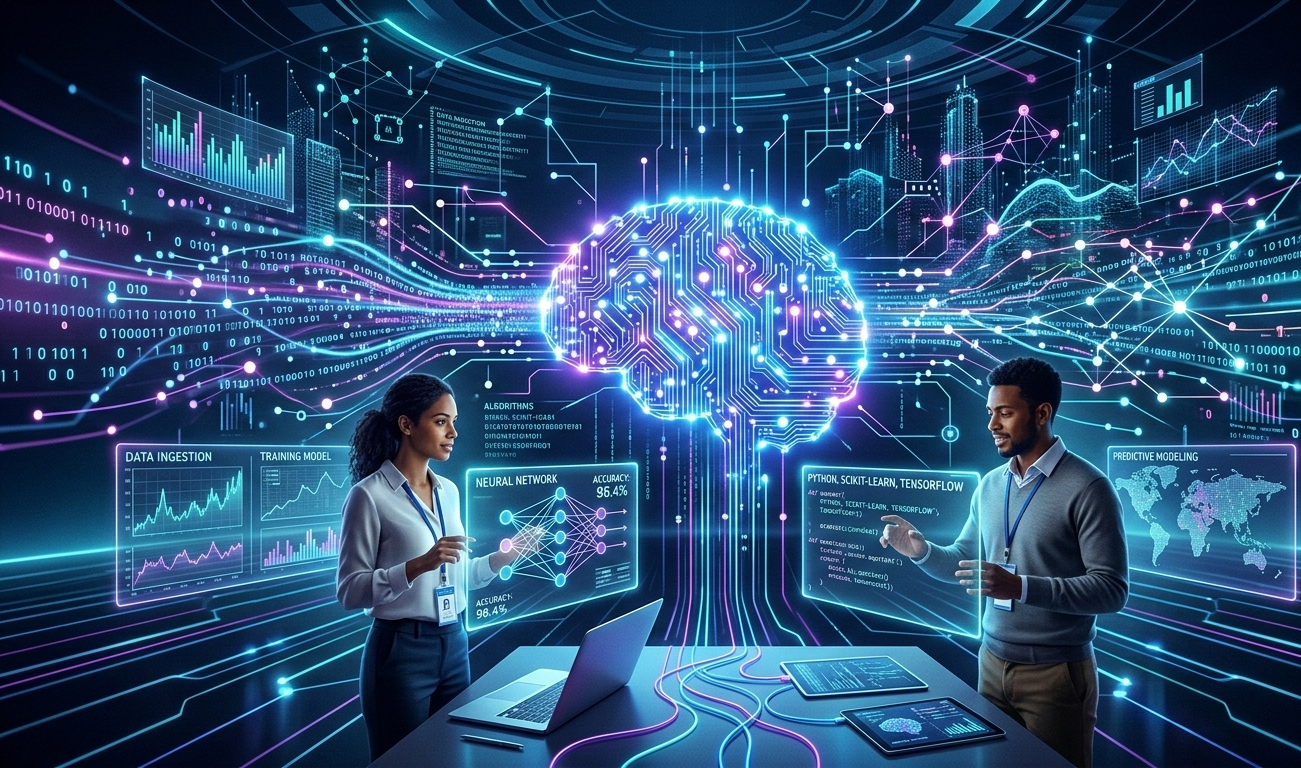
Types of Machine Learning
Different approaches for different business problems
Supervised Learning
Models learn from labeled data to predict outcomes or classify information. Ideal for regression and classification problems.
- Regression Analysis
- Classification
- Time Series Forecasting
- Risk Scoring
Unsupervised Learning
Models discover hidden patterns and structures in unlabeled data. Perfect for customer segmentation and anomaly detection.
- Clustering
- Dimensionality Reduction
- Association Rules
- Pattern Recognition
Reinforcement Learning
Models learn through trial and error, receiving rewards for optimal decisions. Used for robotics, gaming, and optimization.
- Game AI
- Robotics Control
- Resource Optimization
- Autonomous Systems
Popular ML Algorithms
Cutting-edge algorithms for complex business challenges
Decision Trees & Random Forest
Ensemble learning for classification and regression
Linear & Logistic Regression
Statistical models for prediction and classification
Neural Networks
Deep learning for complex pattern recognition
K-Means Clustering
Unsupervised learning for customer segmentation
Gradient Boosting
XGBoost, LightGBM for high-performance prediction
Support Vector Machines
Classification with maximum margin separation
Time Series Models
ARIMA, Prophet for temporal forecasting
Deep Learning
CNNs, RNNs, Transformers for advanced AI
Industry Applications
Machine learning transforming industries
Healthcare
- Disease diagnosis from medical images
- Drug discovery & development
- Patient outcome prediction
- Personalized treatment plans
Finance
- Algorithmic trading
- Credit scoring & underwriting
- Anti-money laundering
- Portfolio optimization
Retail & E-commerce
- Recommendation engines
- Demand forecasting
- Customer lifetime value
- Dynamic pricing
Manufacturing
- Predictive maintenance
- Quality control & defect detection
- Supply chain optimization
- Process automation
Cybersecurity
- Anomaly detection
- Threat intelligence
- Malware classification
- Network intrusion detection
Customer Service
- Chatbots & virtual assistants
- Sentiment analysis
- Ticket routing & prioritization
- Customer feedback analysis
Machine Learning vs Traditional Programming
Understanding the difference
| Aspect | Traditional Programming | Machine Learning |
|---|---|---|
| Approach | Explicit rules & logic | Learning from data |
| Input | Data + Rules = Output | Data + Output = Rules |
| Adaptability | Manual updates required | Self-improving with new data |
| Complex Problems | Difficult to code rules | Learns patterns automatically |
| Maintenance | High for changing scenarios | Continuous learning & adaptation |
Our ML Development Process
End-to-end machine learning lifecycle
We follow a comprehensive methodology to build, deploy, and maintain machine learning models that deliver measurable business impact.
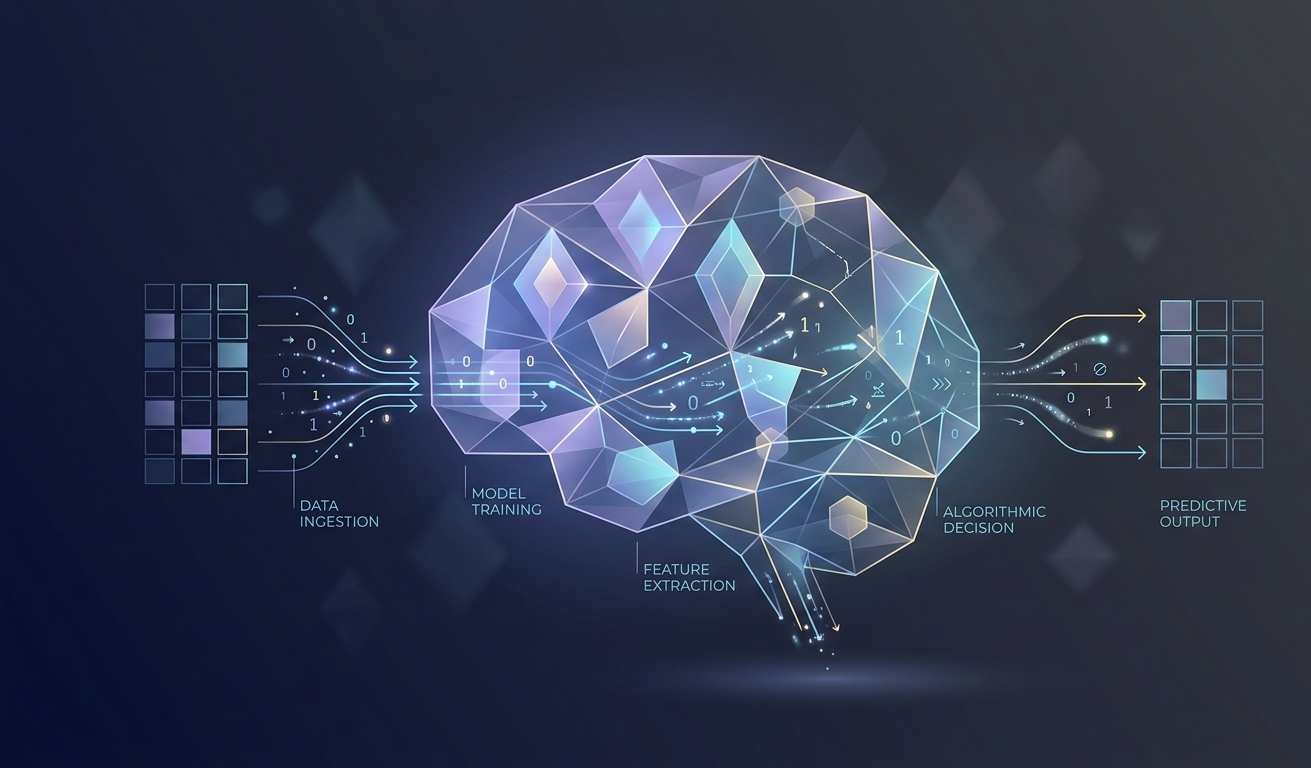
Problem Definition
We work with you to define clear business objectives, identify the right ML approach, and establish success metrics.
Data Collection & Preparation
Gathering, cleaning, and preprocessing data. Feature engineering and selection to optimize model performance.
Model Selection & Training
Choosing the right algorithms, training multiple models, and hyperparameter tuning for optimal results.
Evaluation & Validation
Rigorous testing using appropriate metrics. Cross-validation and A/B testing to ensure reliability.
Deployment & Integration
Deploying models to production environments via APIs, containers, or edge devices with monitoring.
Monitoring & Retraining
Continuous monitoring for model drift and performance degradation. Automated retraining pipelines.
Success Stories
Real results from our machine learning implementations
Personalized Recommendation Engine
Built a collaborative filtering recommendation system that increased cross-sell by 35% and improved customer engagement.
Real-time Fraud Detection System
Implemented an ensemble learning model that detects fraudulent transactions in milliseconds with 96% accuracy.
Medical Image Analysis
Deep learning model for detecting anomalies in X-rays and MRIs with 94% accuracy, assisting radiologists in diagnosis.
Ready to Build Intelligent Systems?
Let's discuss how machine learning can automate decisions, uncover insights, and drive innovation in your business.
Frequently Asked Questions
Common questions about machine learning
Machine learning is a subset of artificial intelligence that enables systems to learn and improve from experience without being explicitly programmed. It uses algorithms to identify patterns in data and make predictions or decisions.
Data requirements vary by problem complexity. Simple models may work with hundreds of examples, while deep learning might need millions. We'll assess your data and recommend the best approach, including data augmentation strategies if needed.
Timelines range from 4-8 weeks for simple models to 3-6 months for complex deep learning systems. This includes data preparation, model development, testing, and deployment.
We provide end-to-end ML services, so you don't need an in-house team. We can also train your existing team and help build ML capabilities within your organization.
We use rigorous validation techniques including cross-validation, holdout testing, and A/B testing. Models are continuously monitored for performance drift and retrained as needed.